Uganda’s Weakening Shilling Raises Fresh Concerns for Kenyan Businesses as Exporters Face Pressure on Sales and Profits

Kenyan businesses that depend on Uganda as a major export market could face growing financial pressure as the Ugandan shilling continues to lose value against the US dollar.
The currency decline has raised concerns about falling demand for Kenyan goods, tougher competition from Ugandan producers and possible delays in payments from customers across the border.
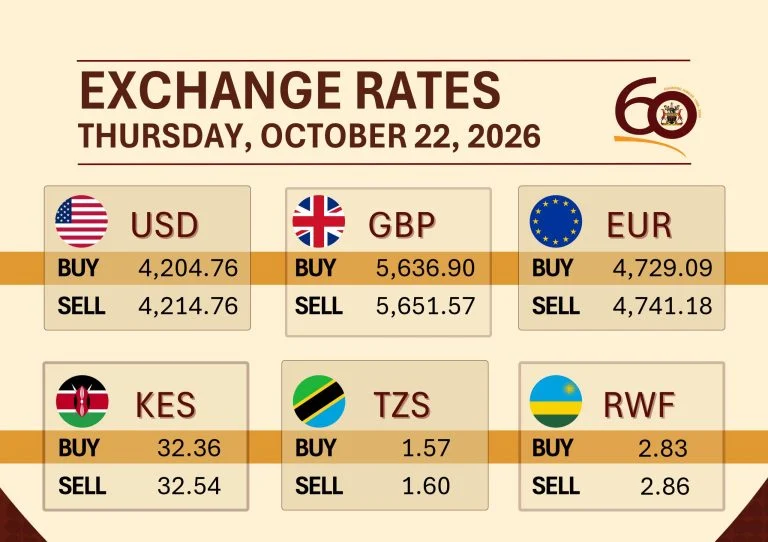
Uganda’s shilling fell to a record low of 4,208.10 against the US dollar on Wednesday, October 21, 2026, despite efforts by the Bank of Uganda to stabilise the currency.
The central bank had increased its benchmark interest rate a week earlier and later intervened in the foreign exchange market by selling dollars to support the shilling.
The situation matters to Kenya because Uganda is one of its most important trading partners.
Why Uganda Matters to Kenyan Businesses
Kenyan companies export several products to Uganda, including petroleum products, cement, pharmaceuticals, iron and steel, soap and edible oils.
Uganda purchased goods worth approximately KSh162.4 billion from Kenya in 2025, according to the figures cited in the source report.
This trade supports manufacturers, transport companies, wholesalers and other businesses that depend on cross-border sales.
However, a weaker Ugandan shilling can make imported goods more expensive for Ugandan buyers who earn their income in the local currency.
Kenyan exporters may then face a difficult choice: maintain their prices and risk losing customers, or offer discounts that reduce their profits.
If buyers reduce orders, Kenyan manufacturers could also be left with unsold stock and lower revenue.
Ugandan Buyers Could Face Higher Import Costs
The impact depends partly on the currency used in trade agreements.
When a Ugandan buyer earns revenue in shillings but must pay a Kenyan supplier in dollars or another foreign currency, depreciation can increase the amount of local currency needed to settle the invoice.
Some buyers may respond by negotiating lower prices, ordering smaller quantities or delaying purchases.
Others could seek alternative suppliers if they can find similar products at more affordable prices.
For Kenyan businesses operating on small profit margins, these changes could affect their ability to pay workers, purchase raw materials and finance daily operations.
The effect will vary depending on the product, payment arrangements and the availability of competing goods.
Ugandan Products Could Become More Competitive
The weakening currency could also affect competition in the opposite direction.
Products manufactured in Uganda may become cheaper for Kenyan buyers when their prices are converted into Kenyan shillings, provided their local prices and production costs do not rise at the same rate.
This could put Kenyan producers under pressure, particularly in border markets such as Busia and Malaba.
However, the currency decline does not automatically make every Ugandan product cheaper. Manufacturers that rely on imported fuel, machinery and packaging may also face rising costs.
The final effect will depend on each business’s production expenses and pricing decisions.
Payment Delays Could Create Cash-Flow Problems
Another concern is the possibility of delayed payments.
Kenyan exporters that supply goods on credit may face difficulties if Ugandan customers struggle to obtain enough foreign currency to settle their invoices.
Although currency depreciation does not automatically mean customers will default, it can increase financial pressure and encourage some buyers to request longer payment periods.
This could leave Kenyan companies waiting longer for money needed to finance new orders and meet operating expenses.
Small traders may be particularly exposed because they often have limited cash reserves and depend on frequent sales to replenish their stock.
Bank of Uganda Responds to Currency Pressure
On October 14, 2026, the Bank of Uganda raised its benchmark Central Bank Rate from 9.75 per cent to 12 per cent.
The move was intended to address mounting pressure on the shilling and concerns about rising inflation.
The central bank also projected that headline inflation could average between 7 per cent and 7.5 per cent over the following 12 months. Its growth forecast for the 2026/27 financial year was lowered to between 6 per cent and 6.5 per cent.
However, the shilling reached another record low on October 21. According to Reuters, the central bank subsequently sold an undisclosed amount of foreign currency in an effort to support it.
Higher interest rates may help manage inflation and currency pressure, but they can also increase borrowing costs for businesses and households.
What Kenyan Businesses Need to Watch
The duration of the currency weakness will be important in determining its impact on Kenya.
Businesses with significant exposure to Uganda may need to monitor exchange rates, review payment terms and assess the financial strength of their customers.
For small traders, careful stock management and closer attention to outstanding invoices could also help reduce financial risks.
Uganda remains an important market for Kenyan goods, but continued currency instability could make cross-border trade more difficult.
The key question is whether the Bank of Uganda’s measures will stabilise the shilling before higher import costs and tighter business conditions significantly affect demand for Kenyan products.