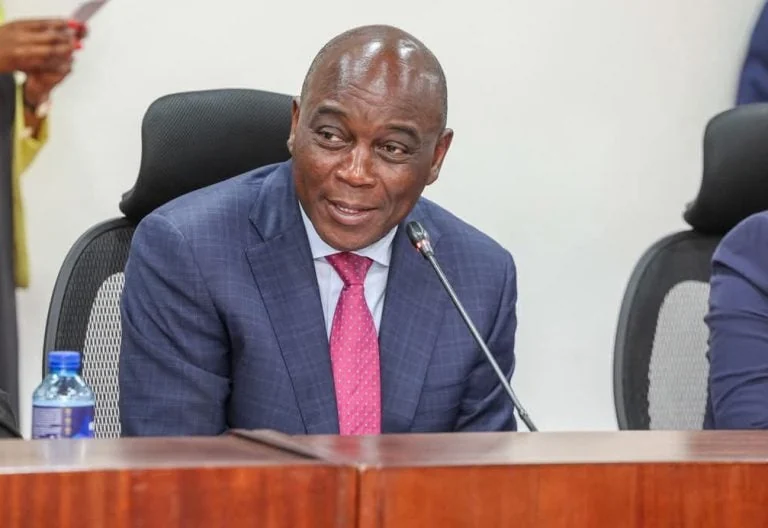

Suba South Member of Parliament Caroli Omondi has accused the Orange Democratic Movement (ODM) and the United Democratic Alliance (UDA) of working together to push changes to Kenya’s election laws through the National Dialogue Committee (NADCO) process.
Omondi warned that the proposed amendments could affect parliamentary independence and raise questions about electoral transparency ahead of the 2027 General Election.
Speaking during a radio interview on Tuesday, November 3, 2026, the MP criticised the negotiations that produced the NADCO proposals, arguing that they did not involve enough political and public participation.
“NADCO was not inclusive. It was exclusive. It was between two political parties that were in a conspiracy,” Omondi said.
He claimed that bills arising from the dialogue process had been pushed through Parliament without adequate debate. He also questioned whether some of the proposals were consistent with the Constitution.
Omondi said he had opposed the NADCO bills because he believed they could restrict the powers of individual lawmakers to scrutinise and amend legislation.
He maintained that Parliament should not simply approve proposals because they had been agreed upon by political parties. Instead, MPs should examine every provision and consider its possible impact on the country.
Dispute Over Live-Streaming Election Results
One of the main issues raised by Omondi concerns the proposed changes to the rules governing the live-streaming of results announced at polling stations.
The Election Laws (Amendment) Bill, 2026, proposes removing the requirement for the Independent Electoral and Boundaries Commission (IEBC) to live-stream polling station results as they are announced.
Under the proposal, the focus would shift to electronic transmission of results to tallying centres, while scanned copies of official declaration forms would remain accessible through the IEBC’s online portal.
Omondi argued that electoral transparency should be assessed against the requirements of the Constitution rather than treated as a simple public information exercise.
He referred to Article 86, which requires elections to be conducted through systems that are simple, accurate, verifiable, secure, accountable and transparent.
“Whatever voting method is used, the system should be simple, accurate, verifiable, secure, accountable and transparent,” he stated.
The MP also explained that presiding officers have specific responsibilities at polling stations, including counting votes, tabulating results and announcing the outcome. Returning officers then handle the collation and announcement of results at their respective tallying levels.
He expressed concern that the proposed changes could blur these responsibilities by assigning functions to the IEBC that the law places on individual election officials.
Paul Muite Had Earlier Raised Concerns
The debate follows earlier criticism from veteran lawyer Paul Muite, who questioned the proposed amendments in July 2026.
Muite warned that changes affecting the visibility of election results could undermine public confidence. In a post on X, he described the proposals as “rigging preparations in plain sight” and raised concerns about the possibility of violence if electoral disputes escalated.
The 2026 bill revives proposals linked to the NADCO process that were introduced in 2024 but did not progress through Parliament at the time.