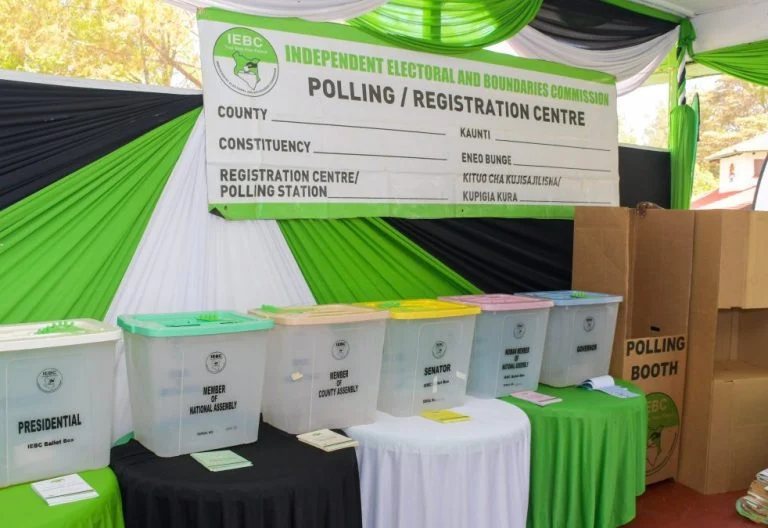

Kenya’s preparations for the 2027 General Election have entered a new stage after the National Assembly passed a Bill seeking to remove the legal requirement for the Independent Electoral and Boundaries Commission (IEBC) to livestream election results as they are announced at polling stations.
The decision, made on Thursday, October 22, 2026, has raised questions about how voters, political parties, journalists and election observers will follow the counting and announcement of results during the next election.
The Elections (Amendment) (No. 2) Bill, 2024, had already been approved by the Senate in December 2024 before being forwarded to the National Assembly.
The proposed changes target Section 39 of the Elections Act, which governs the determination, transmission and declaration of election results.
What the Proposed Changes Mean
Under the proposed amendments, the IEBC would no longer be legally required under the affected provision to livestream results as they are announced at polling stations.
However, removing the requirement would not automatically prevent the commission from broadcasting results voluntarily.
The Bill also retains provisions requiring the IEBC to determine, declare and publish election results after polling closes.
It is important to distinguish livestreaming from electronic transmission and online publication.
Livestreaming allows members of the public to watch results being announced in real time. Electronic transmission moves results through the electoral system, while online publication allows people to access results documents after they are made available.
Therefore, removing mandatory livestreaming would not automatically end electronic transmission or the publication of polling-station results.
The remaining procedures for transmitting, verifying and declaring results would continue to play an important role in the electoral process.
Why Transparency Is a Concern
The proposed changes have attracted attention because election transparency remains an important issue in Kenya.
Livestreaming can allow voters and observers to compare figures announced at polling stations with the results later transmitted and declared by election officials.
Critics of removing the requirement argue that the public could lose an important opportunity to monitor announcements as they happen.
They have also questioned whether electronic transmission and access to published result forms would offer the same level of immediate public scrutiny.
The central concern is whether the remaining safeguards would provide timely access to accurate and verifiable election information.
However, the removal of mandatory livestreaming alone does not establish that the election results would be inaccurate or that electronic transmission would stop.
Heated Debate in Parliament
During the parliamentary debate, Suba South MP Caroli Omondi raised concerns about changes affecting the presidential results framework.
He argued that Parliament needed to carefully examine how presidential votes would be tallied, verified and communicated to the public.
The sitting also featured a dispute after Kirinyaga Woman Representative Njeri Maina alleged that non-Kenyans were being registered as voters.
The Speaker asked her to substantiate the allegation or withdraw it and apologise to the House.
The exchange added to the tense debate as MPs considered the Bill before passing it at the third reading.
The allegation about voter registration would require supporting evidence before it could be treated as established fact.